 alice.tulaeva
 You are about to swap a token on a familiar decentralized exchange. The trade looks ordinary, but your wallet presents two transactions: first an approval, then the swap itself. On another network, the same token seems to require a different approval. Later, a forgotten allowance remains active even though you have stopped using the application. The apparent problem is high gas. The deeper problem is that users often treat transaction cost, token permissions, and chain selection as separate issues when they are parts of one operational system.
For DeFi users in the United States, that distinction matters. A wallet may help estimate fees or identify a risky approval, but it cannot repeal the rules of the underlying blockchain. Gas depends on network demand, transaction complexity, fee markets, and the layer on which the transaction executes. Approval risk depends on what a smart contract is permitted to spend. A multi-chain wallet adds another variable: the same asset name may exist as distinct contracts on different networks, with different balances, applications, and security assumptions.
The first myth: the cheapest transaction is always the best transaction
Gas is the computational fee paid for changing blockchain state. A simple transfer generally consumes less computation than a swap, and a swap may consume less than a transaction that moves through several contracts. The final cost is shaped by both the amount of computation and the fee market at that moment. Reducing the fee setting too aggressively can cause a transaction to wait, fail, or become difficult to replace, while paying more does not make a contract safer or a trade economically sound.
This creates a practical distinction between fee optimization and transaction optimization. Fee optimization asks, “Can this transaction be submitted more cheaply?” Transaction optimization asks, “Should I submit it, on which network, with which route, and with what permissions?” The second question is usually more valuable. A slightly cheaper swap can be a poor result if price impact, bridge exposure, slippage, or a retained allowance creates a larger cost later.
Timing is also misunderstood. Waiting for a quieter period may reduce the fee market component on some networks, but it does not guarantee a lower total cost. Market conditions can move the token price while the user waits, and a failed transaction still consumes gas. On Ethereum and other EVM-compatible networks, users should read the estimated fee as an estimate, not a promise. The relevant comparison is often the total economic outcome: execution fee, exchange rate, slippage, and any additional approval or bridging transaction.
Approvals are permissions, not fees
An ERC-20 approval allows a designated smart contract, called the spender, to transfer a specified amount of a token from the user’s wallet. It is not the same as sending tokens, and revoking it is not the same as reversing a completed trade. This is the conceptual point many interfaces obscure. A low-cost approval can still be dangerous if it grants excessive authority to an untrusted or compromised spender.
Some applications request an allowance for only the amount needed in one transaction. Others request a much larger allowance, sometimes effectively unlimited, to avoid asking the user for repeated approvals. The convenience is real: a user may save a future transaction and its gas fee. The trade-off is also real: if the spender contract is exploited, misconfigured, or replaced through an upgrade mechanism, a broad remaining allowance may increase the amount exposed.
There is no universal rule that every unlimited approval is malicious. Large allowances are common because repeated approvals add friction and cost, especially on a busy network. Nor is revoking every approval automatically optimal. Revocation is itself an on-chain transaction, and it may not be worthwhile for a tiny balance or a spender the user actively needs. A more defensible approach is proportional control: approve only what is justified by the immediate activity when practical, review broad allowances periodically, and give special scrutiny to unfamiliar contracts or abandoned applications.
Wallet simulation and transaction warnings can improve this process by showing what a proposed transaction appears likely to do before signing. They are useful evidence, not an infallible guarantee. Simulations depend on current state and assumptions about contract behavior; a contract can behave differently under another state, through another call path, or after an upgrade. The final authority remains the transaction data, the verified identity of the application, and the user’s understanding of what is being authorized.
Why multi-chain activity changes the mental model
A multi-chain wallet is not one universal account book. On EVM networks, an address can often be used across several chains, but balances, approvals, contract deployments, and transaction histories remain network-specific. An allowance granted to a spender on one chain does not automatically authorize that spender on another chain. Conversely, seeing the same token symbol on two networks does not prove that the assets are interchangeable or issued by the same contract.
This is where chain confusion becomes an expensive mistake. A user may hold a token on a lower-cost network and assume an application on Ethereum can use it directly. In reality, the user may need a bridge, a separate liquidity pool, or a different contract address. The bridge can introduce additional smart-contract and operational risk, while the cheaper network may have thinner liquidity and greater price impact. Gas optimization therefore cannot be reduced to choosing the chain with the smallest displayed fee.
Before signing, a useful checklist is short but demanding: confirm the selected network, verify the token contract rather than relying on its symbol, inspect the spender, review the requested allowance, and compare the expected output with the transaction’s slippage setting. Users installing a wallet extension should obtain it through a source they can independently verify; the rabby extension download page can be treated as a starting point, but users should still check that the browser extension and installation flow match the official project identity.
Network selection also has a security dimension. A chain may offer low fees because it has lower demand, different validator economics, fewer established applications, or thinner infrastructure. None of those conditions proves that it is unsafe, but each changes the risk profile. A low-cost transaction on an unfamiliar chain can be more expensive in expected terms if recovery support is limited, liquidity is shallow, or the user cannot easily identify the correct contract.
A practical framework for gas and approval decisions
Instead of asking whether a transaction is cheap, evaluate it through four filters. First, necessity: is the action required now, or is the user reacting to interface pressure? Second, execution: is the selected route likely to complete with acceptable slippage and contract risk? Third, permission: what can the spender do after the transaction, and for how long? Fourth, reversibility: if the market moves or the application fails, which parts of the decision can be undone and which cannot?
This framework produces different answers for different users. A frequent trader may rationally accept a broader allowance for a well-understood application to reduce repeated approvals. A long-term holder who interacts with DeFi once a month may prefer smaller allowances and periodic cleanup, even if that adds transaction fees. A user moving funds between chains should consider bridge risk and liquidity before celebrating a lower gas estimate. The correct optimization target is not minimum gas in isolation; it is a tolerable combination of cost, permission, execution certainty, and exposure.
Batching can sometimes reduce the number of wallet interactions, but it does not make every operation cheaper or safer. A complex transaction may consume more computation, and a failed bundled action can be harder for a non-specialist to diagnose. Similarly, using a gas token, rushing a replacement transaction, or repeatedly adjusting a fee can introduce complexity without improving the underlying trade. Simplicity has operational value, particularly when the user is managing several chains and cannot easily reconstruct what each contract call did.
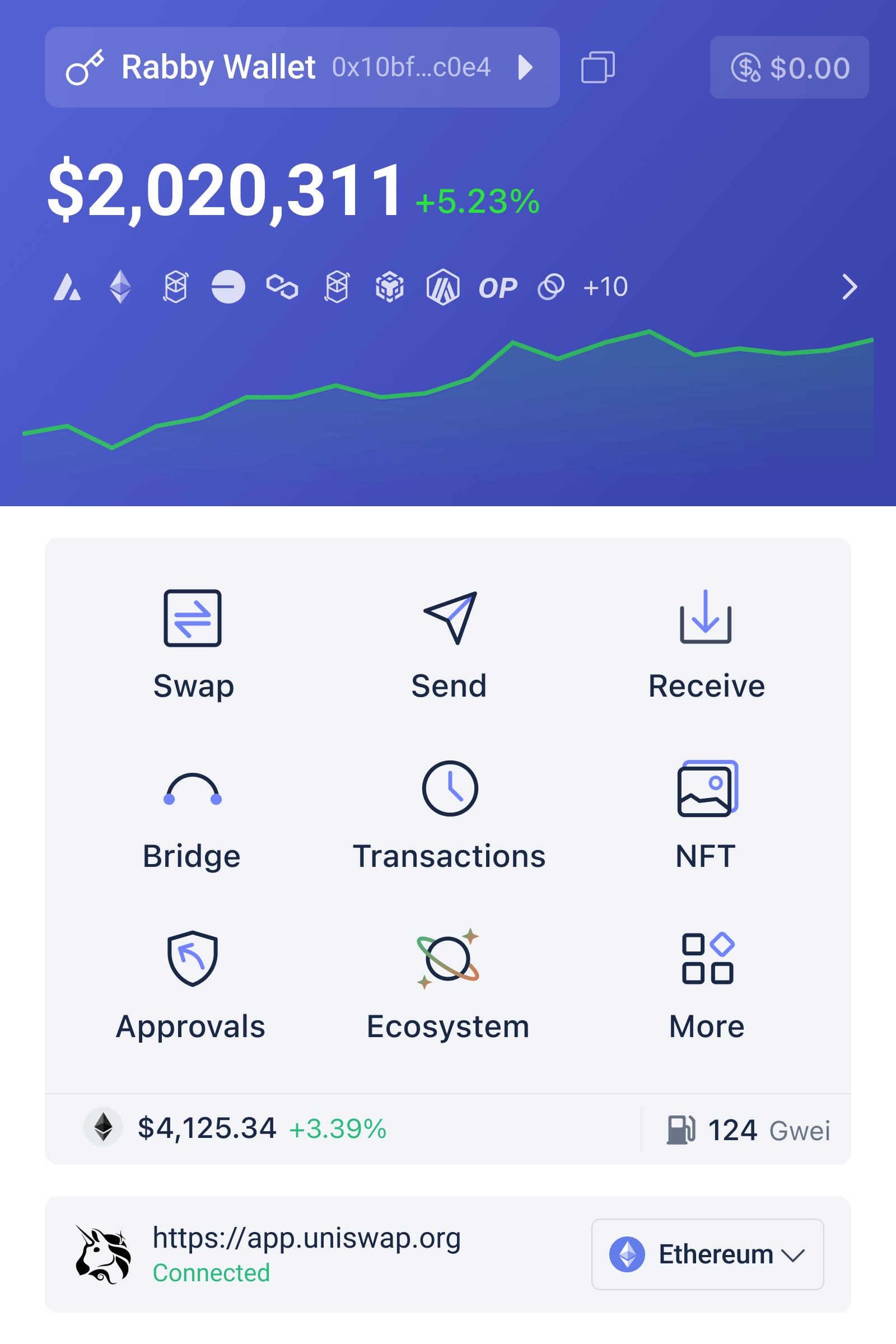
Recent positioning around Rabby as a wallet for Ethereum and EVM chains is relevant because the central user problem is increasingly coordination, not merely storage. As DeFi activity spreads across networks, the useful wallet is one that helps users interpret chain context, contract permissions, and transaction consequences. That does not remove the need for judgment. It shifts judgment earlier, before the signature, when mistakes are more likely to be preventable.
What to watch next
The most important development to watch is not simply whether average fees fall. It is whether wallets make authorization legible enough for users to distinguish a one-time action from a continuing permission. Better interfaces may show the spender, allowance size, chain, expected state changes, and the practical consequence of leaving approval active. If those explanations become standard, users may make fewer errors even when fees remain volatile.
Account abstraction and more flexible transaction flows could eventually support sponsored fees, batched actions, or programmable spending limits. These mechanisms may improve usability, but they also create new trust boundaries: someone must pay the fee, construct the transaction, or enforce the spending policy. The appropriate question will remain the same: which party or contract gains authority, under what conditions, and how can that authority be withdrawn?
For now, the durable lesson is modest. Use fee estimates as planning information, not as a safety signal. Treat approvals as security permissions, not harmless setup steps. Confirm the chain and contract before signing. A multi-chain wallet can make those checks more visible, but the final optimization is behavioral: fewer blind signatures, narrower permissions where practical, and decisions based on total exposure rather than the smallest number in a gas field.
Frequently asked questions
Does revoking a token approval recover funds already spent?
No. Revocation prevents future transfers under that allowance, assuming the relevant permission is actually removed. It cannot reverse a completed swap, recover tokens already transferred, or repair losses caused by a malicious contract. Revocation is a forward-looking control, not a refund mechanism.
Is an unlimited approval always unsafe?
No, but it creates a wider potential exposure than a limited approval. The practical risk depends on the spender contract, its upgrade and administrative controls, the value held in the wallet, and whether the application is still trusted and used. Users who prefer stronger compartmentalization can approve a smaller amount and review allowances more often.
Can a multi-chain wallet automatically prevent every gas or approval mistake?
No. Wallet warnings, simulations, and chain-aware interfaces can reduce confusion, but they cannot guarantee that a contract is honest or that a transaction will remain safe after conditions change. Users still need to verify the network, application, token contract, spender, and economic result before signing.